










Breaking News
 This is the future we shall bring into being
 Elon Musk's Vision For The Future Looks Like A Movie
 Phosphorus Munitions Fired by Israel Burn Groves, Orchards in Southern Lebanon
 Iran's IRGC Warns It Will Expand 'Geography of the War' If the US Attacks Again
Top Tech News
 BEYOND THE MOON: NASA plans a nuclear-powered fleet to push DEEPER into space
 Big Oil Backs Mazama's $135 Million Bet On Superhot Geothermal
 Quantum compass takes flight on Northrop's Lumberjack drone
 Terrifying AI Behavior Even Its Creators Couldn't Explain
 WW3 Near-Miss? AI Hallucinated Nuclear Weapons Components Aboard Chinese Vessel Bound For Iran
 Stripe Is Building the Toll Road for the Machine Economy
 Toyota Dakar hopeful swaps twin-turbo V6 for hydrogen fuel cells
 4-min turbo-inflatable cubic camp castle is now available in the USA
 Researchers Used Claude To Hack OpenAI Employee Accounts
 Chinese Scientists Develop New Oil Refining Method That Cuts Energy Use by 90%



Perovskite Tandem Solar Will Start Taking Solar to 43% Energy Conversion
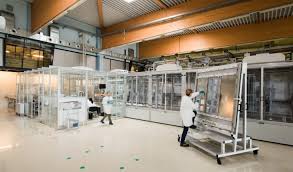
Oxford is working with leading photovoltaic equipment supplier, Meyer Burger. They will install a silicon heterojunction solar cell line, enhanced with production equipment for the perovskite top cell. The fully integrated line will be built at an industrial site in Germany and will start production in 2021 at what will be about a 200 MW/year plant.
In 2019, Oxford PV raised £31 Million in the first close of its Series D funding round.
In November, 2020, Oxford PV was awarded €8.8 million from a German regional government, Brandenburg Ministry of Economics, as part of the EU's Regional Development Program. Oxford PV is investing €44 million in the expansion of its manufacturing facility in Brandenburg an der Havel, where the company has been based since the end of 2016.
Why Perovskite Photovoltaics?
* Enhances the 100 GW photovoltaic industry
When built on top of conventional silicon solar cells, the resulting tandem cells can break through the silicon photovoltaic performance barrier