










Breaking News
 This is the future we shall bring into being
 Elon Musk's Vision For The Future Looks Like A Movie
 Phosphorus Munitions Fired by Israel Burn Groves, Orchards in Southern Lebanon
 Iran's IRGC Warns It Will Expand 'Geography of the War' If the US Attacks Again
Top Tech News
 BEYOND THE MOON: NASA plans a nuclear-powered fleet to push DEEPER into space
 Big Oil Backs Mazama's $135 Million Bet On Superhot Geothermal
 Quantum compass takes flight on Northrop's Lumberjack drone
 Terrifying AI Behavior Even Its Creators Couldn't Explain
 WW3 Near-Miss? AI Hallucinated Nuclear Weapons Components Aboard Chinese Vessel Bound For Iran
 Stripe Is Building the Toll Road for the Machine Economy
 Toyota Dakar hopeful swaps twin-turbo V6 for hydrogen fuel cells
 4-min turbo-inflatable cubic camp castle is now available in the USA
 Researchers Used Claude To Hack OpenAI Employee Accounts
 Chinese Scientists Develop New Oil Refining Method That Cuts Energy Use by 90%



World's First Community of 3D Printed Homes is Set to House Mexico's Poorest Families
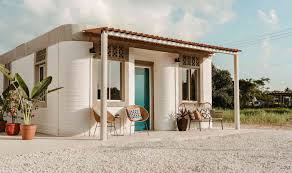
It has been two years since the first ever permitted 3D printed house in the US was built in Texas in less than 24 hours.
Now according to New Story—the nonprofit pioneering solutions to end global homelessness—the world's first 3D printed community is officially underway with the first two homes already built in Mexico.
The resilient, 500-square-foot homes were each 3D printed in around 24 hours of print time across several days by ICON, a construction technologies company, and feature final construction build out by ÉCHALE, New Story's nonprofit partner in Mexico.
The built-to-last homes located in rural Tabasco, Mexico will be granted to local families currently living in extreme poverty and makeshift, unsafe shelter. The community of 3D printed homes will contain 50 homes in total.
After 18 months in planning, New Story and ICON completed the first two printed homes using the Vulcan II, a massive 3D printer that is designed to work under the constraints that are common in rural locations.
This printer, designed to tackle housing shortages for vulnerable populations, is the first of its kind.
The 3D printed homes feature two bedrooms, a living room, kitchen and bath. Co-designed with feedback from the families who will live in them, the homes have been created to meet the specific needs of the community.