










Breaking News
 When Corporations Resist the State: Ethics, AI, and the Limits of Government Power
 The #1 Best Potassium Food on Earth (It's Not Bananas)
 ONE WEEK TO ARMAGEDDON?
 America Dependent On Chinese Electrical Parts For AI Build-Out
Top Tech News
 DARPA O-Circuit program wants drones that can smell danger...
 Practical Smell-O-Vision could soon be coming to a VR headset near you
 ICYMI - RAI introduces its new prototype "Roadrunner," a 33 lb bipedal wheeled robot.
 Pulsar Fusion Ignites Plasma in Nuclear Rocket Test
 Details of the NASA Moonbase Plans Include a Fifteen Ton Lunar Rover
 THIS is the Biggest Thing Since CGI
 BACK TO THE MOON: Crewed Lunar Mission Artemis II Confirmed for Wednesday...
 The Secret Spy Tech Inside Every Credit Card
 Red light therapy boosts retinal health in early macular degeneration
 Hydrogen-powered business jet edges closer to certification


Lamborghini Sián: The world's first supercapacitor-hybrid supercar
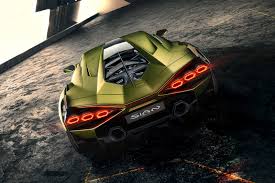
Supercapacitors, as opposed to batteries, offer a unique set of advantages and drawbacks to automakers. They have enormous charge and discharge rates, meaning they can put out huge amounts of power, charge up almost instantly, and pull in a much larger amount of energy through things like regenerative braking, in which a battery's ability to accept charge becomes a limiting factor. They also don't deteriorate over time, maintaining their performance over millions of cycles.
On the other hand, their energy density is terrible in comparison to lithium-ion batteries. Even cutting-edge ultracapacitors like those from Nawa in France can only store about a quarter of the energy per volume that a regular lithium battery can – and lithium is far from energy dense itself in comparison to hydrogen or hydrocarbon fuels. They also stink at long-term energy storage, steadily leaking away what they've got stored up over the course of maybe a week or two.