










Breaking News
 'UNFAIR': Mamdani's city-run grocer plan SLAPPED with lawsuit
 Trump Says If Iran Had a Nuclear Weapon, He Would Have Politely Called the Supreme Leader...
 Tucker Carlson: We are on the brink of a world war that ends with the use of nuclear weapons
 Who is trying to destroy the United States and the world?
Top Tech News
 NASA Super Light Solar Sail Project Will Be 12-40 Times Lighter and Faster
 Space Telescope Interferometer to Image Exoplanet Continents
 Twenty-five years of "temporary": how 9/11 built a surveillance state Americans never vote
 I'll Never Buy Another WALMART Battery!
 Shoei GT-Air 3 Smart helmet drops with built-in AR for $1,500
 Freezable titanium plate keeps your cooler chilled way longer than ice packs
 Review: Affordable thermal device is made for discovering life outdoors
 AI Whistleblower Tells Tucker How AI Could Kill All Humans by 2040
 You Hate Flock? Well There's More...
 Will Spiking Diesel Prices Drive Autonomous Trucking?



TALOS Exoskeleton Program Fails But Silent Electric Dirt Bikes Could Work Out
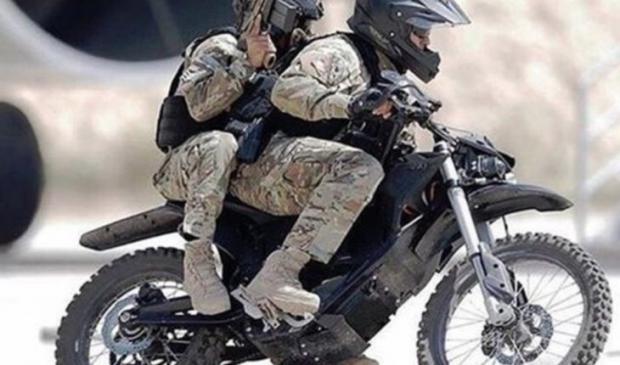
There have been improvements in lightweight body armor and improved helmet displays.
There are tests of partial suits to help support walking and running with heavy loads.
In 2018, the Army began evaluating Lockheed Martin's ONYX exoskeleton. The ONYX supports the knee joints when carrying heavy loads over uneven terrain. ONYX uses less power than a full-body exoskeleton. The current design is able to achieve 8 to 16 hours of operation over realistic terrain. If the tests are successful the suits could be used in the field as early as 2021. It is likely that the partial suits will be used in warehouse and supply chain situations for support personnel. It will take years before they are ready for combat situations.
The soft exosuits are also not ready and are struggling to provide a 20% boost in the efficiency of movement.