










Breaking News
 "Begin Preparing Yourself..." - Jeffrey Sachs
 The 5-Year Treasury Just Broke 5%... The Whole Curve Is Next
 ICE Denounced for Enacting 'Official Government Policy of Disappearing People'
 Google Just Told Canadian Adults: Give Us Your ID and a Selfie Or Else…And It's Starting Now!!
Top Tech News
 Tesla Model 3 killer charges from 10 to 97% in just 9 minutes
 World-first unpowered DNA computer sets speed record
 I Power 5 Buildings Off-Grid. Here's How
 The US government is pushing hard to get a working nuclear fission reactor into space by late 2028
 SpaceX Starmind AI in Space Radiator
 China Will Dominate Global Nuclear Energy Through 2035, Analyst Says
 These Absolutely Wild-Looking EVs Are Saudi Arabia's First Homegrown Cars
 BEYOND THE MOON: NASA plans a nuclear-powered fleet to push DEEPER into space
 Big Oil Backs Mazama's $135 Million Bet On Superhot Geothermal
 Quantum compass takes flight on Northrop's Lumberjack drone


Hyperpolarized quantum MRI increases sensitivity 100,000 times
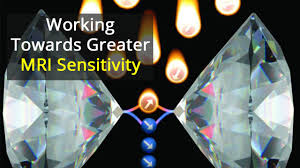
Current MRI have limited sensitivity and even the most expensive MRI scanners (with the strongest magnets) cannot detect and visualize molecular and metabolic activity in the heart with sufficient sensitivity and specificity.
Emerging hyperpolarized MRI techniques increased the sensitivity of MRI by up to five orders of magnitude.
Above – The technique used in MetaboliQs is based on the hyperpolarization of marker molecules like pyruvate Foto: Dr. Christoph Nebel, Fraunhofer IAF
Unfortunately, the hyperpolarization process takes a very long time (90-180 minutes per procedure), it is extremely costly and cumbersome (over $2million initial cost, room size equipment) and requires temperatures colder than -270 degrees Celsius.