










Breaking News
 "Begin Preparing Yourself..." - Jeffrey Sachs
 The 5-Year Treasury Just Broke 5%... The Whole Curve Is Next
 ICE Denounced for Enacting 'Official Government Policy of Disappearing People'
 Google Just Told Canadian Adults: Give Us Your ID and a Selfie Or Else…And It's Starting Now!!
Top Tech News
 Tesla Model 3 killer charges from 10 to 97% in just 9 minutes
 World-first unpowered DNA computer sets speed record
 I Power 5 Buildings Off-Grid. Here's How
 The US government is pushing hard to get a working nuclear fission reactor into space by late 2028
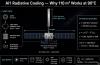 SpaceX Starmind AI in Space Radiator
 China Will Dominate Global Nuclear Energy Through 2035, Analyst Says
 These Absolutely Wild-Looking EVs Are Saudi Arabia's First Homegrown Cars
 BEYOND THE MOON: NASA plans a nuclear-powered fleet to push DEEPER into space
 Big Oil Backs Mazama's $135 Million Bet On Superhot Geothermal
 Quantum compass takes flight on Northrop's Lumberjack drone


'We will get regular body upgrades': what will humans look like in 100 years?

Predicting the future is a fool's game at the best of times. Right now it's madness – so much is up in the air technologically, politically, economically, ecologically and spiritually, it seems as likely we'll be shivering in caves as enjoying our new bionic exoskeletons by 2118. For all the talk of humans living longer, life expectancy has flatlined in recent years. The near future doesn't look younger and fitter so much as older and fatter, as the median age in the developed world powers past 40 towards the middle of the century.
But of all the developments emerging now, it's technology focused on the human body that would appear to introduce the most chaos into the system. California biotech startups talk of making death "optional". Facebook is working on telepathic interfaces. Bionic limbs will soon outperform human limbs. Crispr-Cas9 gene-editing technology theoretically allows us to fiddle around with genomes. We could look, think and feel in radically different ways.