










Breaking News
 "Begin Preparing Yourself..." - Jeffrey Sachs
 The 5-Year Treasury Just Broke 5%... The Whole Curve Is Next
 ICE Denounced for Enacting 'Official Government Policy of Disappearing People'
 Google Just Told Canadian Adults: Give Us Your ID and a Selfie Or Else…And It's Starting Now!!
Top Tech News
 Tesla Model 3 killer charges from 10 to 97% in just 9 minutes
 World-first unpowered DNA computer sets speed record
 I Power 5 Buildings Off-Grid. Here's How
 The US government is pushing hard to get a working nuclear fission reactor into space by late 2028
 SpaceX Starmind AI in Space Radiator
 China Will Dominate Global Nuclear Energy Through 2035, Analyst Says
 These Absolutely Wild-Looking EVs Are Saudi Arabia's First Homegrown Cars
 BEYOND THE MOON: NASA plans a nuclear-powered fleet to push DEEPER into space
 Big Oil Backs Mazama's $135 Million Bet On Superhot Geothermal
 Quantum compass takes flight on Northrop's Lumberjack drone


3D printed human corneas could provide unlimited supply for transplants
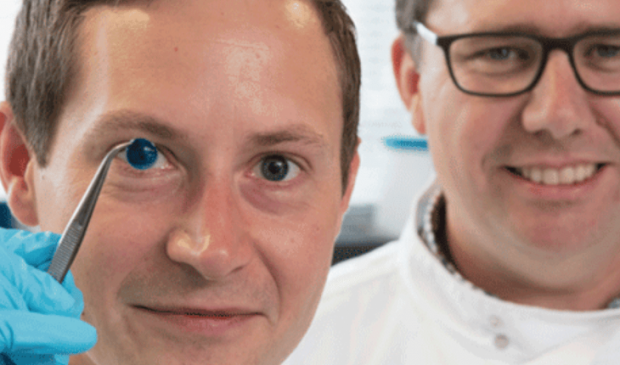
They have a unique gel – a combination of alginate and collagen – which keeps the stem cells alive whilst producing a material which is stiff enough to hold its shape but soft enough to be squeezed out the nozzle of a 3D printer.
Experimental Eye Research – 3D bioprinting of a corneal stroma equivalent
As the outermost layer of the human eye, the cornea has an important role in focusing vision.
Yet there is a significant shortage of corneas available to transplant, with 10 million people worldwide requiring surgery to prevent corneal blindness as a result of diseases such as trachoma, an infectious eye disorder.
In addition, almost 5 million people suffer total blindness due to corneal scarring caused by burns, lacerations, abrasion or disease.