










Breaking News
 No Benefits: Why Most Americans Hate The Idea Of AI Data Centers
 Are America's Youth Really Embracing Socialism?
 Are We About to See a Foreclosure WAVE Hit the US Housing Market?
 They Rolled Out the Relics - Then Cut the Working-Lands Money
Top Tech News
 World's smallest CT scanner fits in the palm of your hand
 The Tesla Roadster will blow people's minds
 Peter Thiel-Funded Company Anduril to Triple the Number of Autonomous Surveillance Towers...
 Quantum computing may soon become part of the microscope itself.
 Volkswagen Just Unveiled The Most Efficient EV Ever Tested
 NASA Super Light Solar Sail Project Will Be 12-40 Times Lighter and Faster
 Space Telescope Interferometer to Image Exoplanet Continents
 Twenty-five years of "temporary": how 9/11 built a surveillance state Americans never vote
 I'll Never Buy Another WALMART Battery!
 Shoei GT-Air 3 Smart helmet drops with built-in AR for $1,500



The Age of Graphene: Samsung's Revolutionary Battery Technology
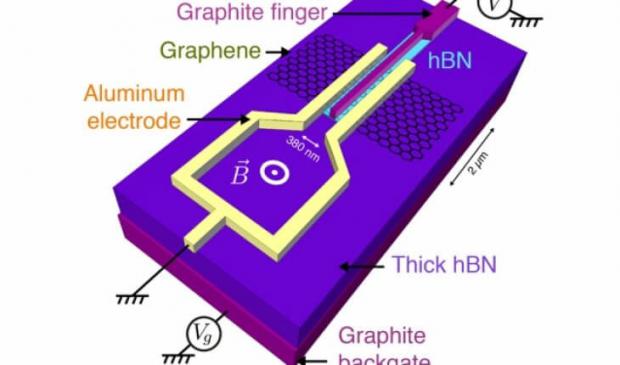
Pre-historic times and ancient history are defined by the materials that were harnessed during that period. We have the stone age, the bronze age, and the iron age. Today is a little more complex, we live in the Space Age, the Nuclear Age, and the Information Age. And now we are entering the Graphene Age, a material that will be so influential to our future, it should help define the period we live in. Potential applications for Graphene include uses in medicine, electronics, light processing, sensor technology, environmental technology, and energy, which brings us to Samsung's incredible battery technology! Imagine a world where mobile devices and electric vehicles charge 5 times faster than they do today. Cell phones, laptops, and tablets that fully charge in 12 minutes or electric cars that fully charge at home in only an hour. Samsung will make this possible because, on November 28th, they announced the development of a battery made of graphene with charging speeds 5 times faster than standard lithium-ion batteries. Before I talk about that, let's quickly go over what Graphene is. When you first hear about Graphene's incredible properties, it sounds like a supernatural material out of a comic book. But Graphene is real! And it is made out of Graphite, which is the crystallized form of carbon and is commonly found in pencils. Graphene is a single atom thick structure of carbon atoms arranged in a hexagonal lattice and is a million time thinner than a human hair. Graphene is the strongest lightest material on Earth. It is 200 times stronger than steel and as much as 6 times lighter. It can stretch up to a quarter of its length but at the same time, it is the hardest material known, harder than a diamond. Graphene can also conduct electricity faster than any known substance, 140 times faster than silicone. And it conducts heat 10 times better than copper. It was first theorized by Phillip Wallace in 1947 and attempts to grow graphene started in the 1970s but never produced results that could measure graphene experimentally. Graphene is also the most impermeable material known, even Helium atoms can't pass through graphene. In 2004, University of Manchester scientists Andre Geim and Konstantin Novoselov successfully isolated one atom thick flakes of graphene for the first time by repeatedly separating fragments from chunks of graphite using tape, and they were awarded the Nobel Prize in Physics in 2010 for this discovery. Over the past 10 years, the price of Graphene has dropped at a tremendous rate. In 2008, Graphene was one of the most expensive materials on Earth, but production methods have been scaled up since then and companies are selling Graphene in large quantities.