










Breaking News
 "Begin Preparing Yourself..." - Jeffrey Sachs
 The 5-Year Treasury Just Broke 5%... The Whole Curve Is Next
 ICE Denounced for Enacting 'Official Government Policy of Disappearing People'
 Google Just Told Canadian Adults: Give Us Your ID and a Selfie Or Else…And It's Starting Now!!
Top Tech News
 Tesla Model 3 killer charges from 10 to 97% in just 9 minutes
 World-first unpowered DNA computer sets speed record
 I Power 5 Buildings Off-Grid. Here's How
 The US government is pushing hard to get a working nuclear fission reactor into space by late 2028
 SpaceX Starmind AI in Space Radiator
 China Will Dominate Global Nuclear Energy Through 2035, Analyst Says
 These Absolutely Wild-Looking EVs Are Saudi Arabia's First Homegrown Cars
 BEYOND THE MOON: NASA plans a nuclear-powered fleet to push DEEPER into space
 Big Oil Backs Mazama's $135 Million Bet On Superhot Geothermal
 Quantum compass takes flight on Northrop's Lumberjack drone


Two surgeons in China developing a method to transplant a human head
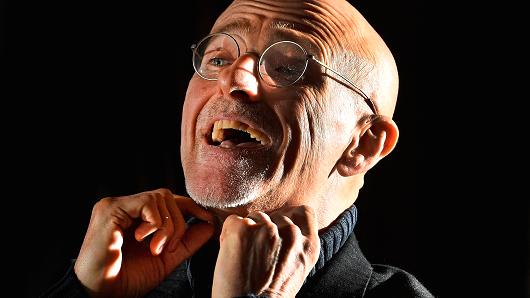
Canavero and Ren recently performed a trial run on two cadavers, prompting outrage from the medical community, which has declared human head transplantation "fake news." An examination by a team of independent scientists published this month, however, suggests that, while fantastical seeming, the scientific and medical advancements necessary for human head transplantation are rapidly approaching plausibility. Nevertheless, major ethical and moral hurdles remain.
Canavero has been talking up his plan for human head transplantation in TED talks and the media for decades, despite producing little in the way of scientific evidence, going so far as to announce in 2015 that he would perform surgery on a human volunteer — a young man with Werdnig-Hoffman disease, a degenerative disease where the muscles waste away — by 2017. The volunteer backed out, and the surgery still hasn't been done on a living human, but Canavero maintains that it is "imminent."