










Breaking News
 "Begin Preparing Yourself..." - Jeffrey Sachs
 The 5-Year Treasury Just Broke 5%... The Whole Curve Is Next
 ICE Denounced for Enacting 'Official Government Policy of Disappearing People'
 Google Just Told Canadian Adults: Give Us Your ID and a Selfie Or Else…And It's Starting Now!!
Top Tech News
 Tesla Model 3 killer charges from 10 to 97% in just 9 minutes
 World-first unpowered DNA computer sets speed record
 I Power 5 Buildings Off-Grid. Here's How
 The US government is pushing hard to get a working nuclear fission reactor into space by late 2028
 SpaceX Starmind AI in Space Radiator
 China Will Dominate Global Nuclear Energy Through 2035, Analyst Says
 These Absolutely Wild-Looking EVs Are Saudi Arabia's First Homegrown Cars
 BEYOND THE MOON: NASA plans a nuclear-powered fleet to push DEEPER into space
 Big Oil Backs Mazama's $135 Million Bet On Superhot Geothermal
 Quantum compass takes flight on Northrop's Lumberjack drone


MIT Researchers Have Developed a 'System for Dream Control'
There is a borderland between waking life and the uncharted wilderness of sleep that we all traverse each night, but we rarely stop to marvel at the strangeness of this liminal world. If we do, we find that it is full of hallucinations both wonderful and terrifying, a mental goulash of reality and fantasy.
Usually we pass through this state of half-wakefulness on our way to deep sleep within minutes. We may experience microdreams during the transition, but the content of these microdreams appear to be random and we usually don't have any memory of them when we wake. A team of researchers led by MIT doctoral candidate Adam Horowitz wants to change that.
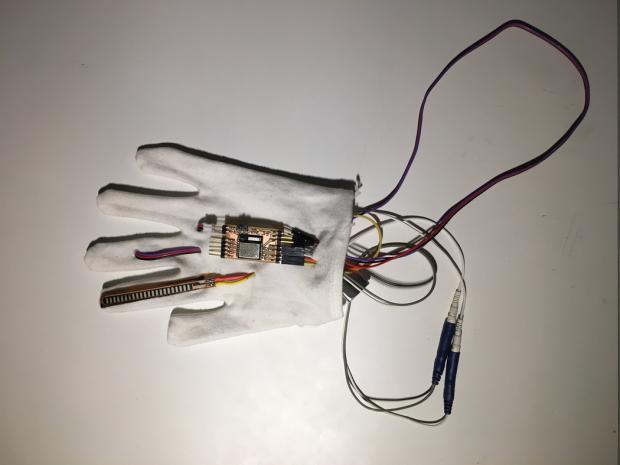
Horowitz and his colleagues at the MIT Media Lab have developed a relatively simple device called Dormio to interface with this unique stage of sleep. Their hypothesis is that this liminal period between wakefulness and sleep is a fount of creativity that is usually lost in the ocean of sleep. The thinking is that if you're able to descend into that stage of sleep and return to consciousness without descending deeper into sleep, you will benefit from the intensely associative thinking that characterizes the strange microdreams experienced during the transition to sleep.
So far Horowitz has tested the device on 15 subjects and found that it is able to reliably maximize the amount of time users spend suspended between wakefulness and sleep, as well as shape the content of the microdreams they experience. In other words, these MIT researchers have developed a low cost device that allows users to interface with sleep.
WHEN IS A SLEEPER ACTUALLY ASLEEP?
The technical name for the awareness of the brief period between wakefulness and sleep is hypnagogia, and its something of a mystery for neuroscientists. The reason for this is that determining when someone is actually asleep is a matter of debate among scientists. It's kind of like trying to determine when someone is 'actually' dead: Is it when the heart stops beating, when they lose consciousness, or when cells finally stop replicating?
What is certain, however, is that hypnagogia is a natural phenomenon that almost all of us encounter on a nightly basis.
"Hypnagogic imagery or hallucinations is a normal state of consciousness in the transition from wakefulness to sleep," Vladas Noreika, a psychologist at Cambridge who was not involved with Dormio, told me in an email. Unlike other sleep states that allow for awareness, such as lucid dreaming during REM sleep, hypnagogia doesn't require special training to induce its effects. It's a common phenomenon that is a natural part of the circadian rhythm.