










Breaking News
 The Benefits of Drinking Clove Water at Night
 Deep Dive into Darkness, Future Predictions W/ Stacking Surfer & SD
 These Fires Are The Worst Natural Disaster In The History Of Spokane...
 Mike Rowe's Anti-Communism Message on Twitter/X Goes Viral: 'They Are Literally Quoting Karl
Top Tech News
 Voyager 1 approaches one light day from Earth
 Visual Implants
 Renewable Energy Breakthrough! World's Most Efficient Tesla Turbine System
 I Told You So
 Meet Sunbird, a nuclear fusion-powered space tug concept from Pulsar Fusion.
 China and Russia launch 29-nation AI alliance to rival western control of technology
 BREAKING: China has begun manufacturing domestically developed Immersion Deep...
 Idaho's High Desert Becomes Hot Spot For Nuclear Power Revolution
 The World's Largest Electric Aircraft Is About to Take Its First Flight
 Tesla Cybercabs and Superchargers Will Act as Mini Cell Towers for SpaceX Starlink



Could the police replay murder victims' memories after they DIE?
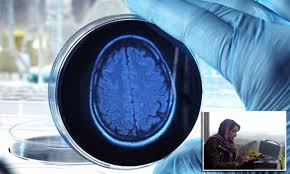
Our memories leave a clear and unique genetic mark on our brains.
That's the remarkable discovery of scientists in Israel who say these genetic markers could be used to unlock memories after people die.
The technology opens the door to strange scenarios, similar to those portrayed in the series 'Black Mirror', where investigators can record and playback the memories of suspected criminals.
It could even lead to a future in which police are able to read and replay memories of murder victims to help them piece together the events leading up to their death.
Scroll down for video
Our memories leave a clear and unique genetic mark on our brains. That's the remarkable discovery of scientists in Israel who say these genetic markers could be used to unlock memories after people die (stock)
'It's a fascinating proposal,' said Clea Warburton at the University of Bristol told New Scientist.
'You would have to get in there extremely quickly, as proteins start to degrade within minutes of death,' says Dr Warburton.
'It probably wouldn't give you more information than a good forensic scientist could, but I wouldn't be surprised if we end up with a film about this.'
The discovery was made by researchers from the Hebrew University in Jerusalem.