










Breaking News
 "Begin Preparing Yourself..." - Jeffrey Sachs
 The 5-Year Treasury Just Broke 5%... The Whole Curve Is Next
 ICE Denounced for Enacting 'Official Government Policy of Disappearing People'
 Google Just Told Canadian Adults: Give Us Your ID and a Selfie Or Else…And It's Starting Now!!
Top Tech News
 Tesla Model 3 killer charges from 10 to 97% in just 9 minutes
 World-first unpowered DNA computer sets speed record
 I Power 5 Buildings Off-Grid. Here's How
 The US government is pushing hard to get a working nuclear fission reactor into space by late 2028
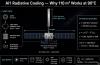 SpaceX Starmind AI in Space Radiator
 China Will Dominate Global Nuclear Energy Through 2035, Analyst Says
 These Absolutely Wild-Looking EVs Are Saudi Arabia's First Homegrown Cars
 BEYOND THE MOON: NASA plans a nuclear-powered fleet to push DEEPER into space
 Big Oil Backs Mazama's $135 Million Bet On Superhot Geothermal
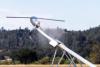 Quantum compass takes flight on Northrop's Lumberjack drone


US is funding $400-600 million for each of three exascale supercomputers to be delivered...

The Department of Energy's (DOE's) Office of Science (SC) and National Nuclear Security Administration (NNSA) are collaborating to acquire non-recurring engineering (NRE) and up to three exascale High Performance Computing (exascale HPC) systems. This collaboration, known as CORAL, involves Argonne National Laboratory (ANL), Lawrence Livermore National Laboratory (LLNL), and Oak Ridge National Laboratory (ORNL), which are collectively referred to as the Laboratories herein.
The exascale HPC systems described in the RFP are as follows:
* ORNL System delivered in 2021 and accepted in 2022 (ORNL system)
* LLNL System delivered in 2022 and accepted in 2023 (LLNL system)
* ANL Potential System delivered in 2022 and accepted in 2023 (ANL system)
The anticipated budget range for each system, including any associated NRE, is $400 million to $600 Million. The budget range for NRE alone is expected to be $75M to $150M. However, the actual NRE or system award amount may be more or less than the anticipated budget, depending on the Laboratories' perceived value of the proposal(s), resulting negotiations, and annual appropriated funding from Congress.