










Breaking News
 "Begin Preparing Yourself..." - Jeffrey Sachs
 The 5-Year Treasury Just Broke 5%... The Whole Curve Is Next
 ICE Denounced for Enacting 'Official Government Policy of Disappearing People'
 Google Just Told Canadian Adults: Give Us Your ID and a Selfie Or Else…And It's Starting Now!!
Top Tech News
 Tesla Model 3 killer charges from 10 to 97% in just 9 minutes
 World-first unpowered DNA computer sets speed record
 I Power 5 Buildings Off-Grid. Here's How
 The US government is pushing hard to get a working nuclear fission reactor into space by late 2028
 SpaceX Starmind AI in Space Radiator
 China Will Dominate Global Nuclear Energy Through 2035, Analyst Says
 These Absolutely Wild-Looking EVs Are Saudi Arabia's First Homegrown Cars
 BEYOND THE MOON: NASA plans a nuclear-powered fleet to push DEEPER into space
 Big Oil Backs Mazama's $135 Million Bet On Superhot Geothermal
 Quantum compass takes flight on Northrop's Lumberjack drone


Cancer-killing hydrogel stays in place until the job is done
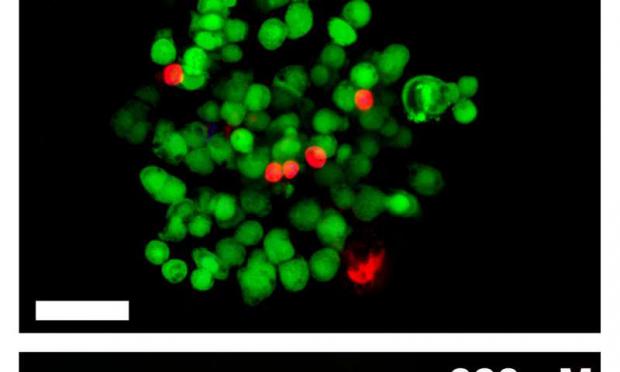
The trick is to give it a boost to find and destroy those rogue cells, and that's the focus of the field of immunotherapy. To that end, a new hydrogel has been developed that can be injected directly to the site of a tumor, where it stays to slowly release its payload of immunotherapy drugs for longer.
Put the two into a ring, and the immune system will win every round against cancer. To give itself a fighting chance, the Big C instead focuses its attention on stealth attacks, using a variety of tactics to evade detection by the immune system until it can grow strong enough to overwhelm the body.
Immunotherapy aims to swing the odds back into our favor, re-arming the immune system with new ways to detect and kill cancer cells. These techniques mainly involve extracting a sample of a patient's T cells, genetically engineering them to attack tumors, and returning them to the body. Others may be able to stimulate the system with a single injection, akin to a cancer vaccine.