










Breaking News
 "Begin Preparing Yourself..." - Jeffrey Sachs
 The 5-Year Treasury Just Broke 5%... The Whole Curve Is Next
 ICE Denounced for Enacting 'Official Government Policy of Disappearing People'
 Google Just Told Canadian Adults: Give Us Your ID and a Selfie Or Else…And It's Starting Now!!
Top Tech News
 Tesla Model 3 killer charges from 10 to 97% in just 9 minutes
 World-first unpowered DNA computer sets speed record
 I Power 5 Buildings Off-Grid. Here's How
 The US government is pushing hard to get a working nuclear fission reactor into space by late 2028
 SpaceX Starmind AI in Space Radiator
 China Will Dominate Global Nuclear Energy Through 2035, Analyst Says
 These Absolutely Wild-Looking EVs Are Saudi Arabia's First Homegrown Cars
 BEYOND THE MOON: NASA plans a nuclear-powered fleet to push DEEPER into space
 Big Oil Backs Mazama's $135 Million Bet On Superhot Geothermal
 Quantum compass takes flight on Northrop's Lumberjack drone


DARPA tries to create real life biostasis to give more time to treat injured people
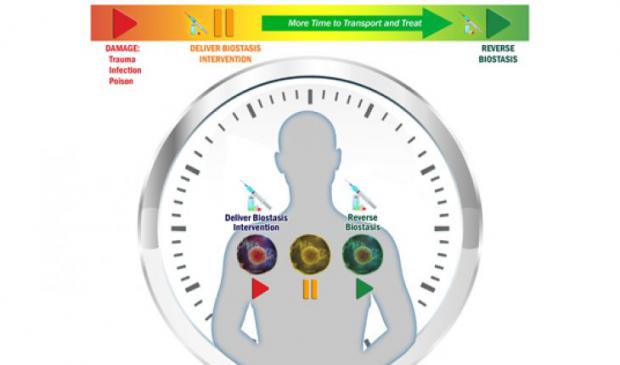
DARPA is now trying to do this in real life. DARPA wants to mimick the biological and chemical processes of water bears and wood frogs who are able to place themselves into a biological suspended state.
When a Service member suffers a traumatic injury or acute infection, the time from event to first medical treatment is usually the single most significant factor in determining the outcome between saving a life or not. First responders must act as quickly as possible, first to ensure a patient's sheer survival and then to prevent permanent disability. The Department of Defense refers to this critical, initial window of time as the "golden hour," but in many cases the opportunity to successfully intervene may extend much less than sixty minutes, which is why the military invests so heavily in moving casualties as rapidly as possible from the battlefield to suitable medical facilities. However, due to the realities of combat, there are often hard limits to the availability of rapid medical transport and care.
DARPA created the Biostasis program to develop new possibilities for extending the golden hour, not by improving logistics or battlefield care, but by going after time itself, at least how the body manages it. Biostasis will attempt to directly address the need for additional time in continuously operating biological systems faced with catastrophic, life-threatening events.