










Breaking News
 "Begin Preparing Yourself..." - Jeffrey Sachs
 The 5-Year Treasury Just Broke 5%... The Whole Curve Is Next
 ICE Denounced for Enacting 'Official Government Policy of Disappearing People'
 Google Just Told Canadian Adults: Give Us Your ID and a Selfie Or Else…And It's Starting Now!!
Top Tech News
 Tesla Model 3 killer charges from 10 to 97% in just 9 minutes
 World-first unpowered DNA computer sets speed record
 I Power 5 Buildings Off-Grid. Here's How
 The US government is pushing hard to get a working nuclear fission reactor into space by late 2028
 SpaceX Starmind AI in Space Radiator
 China Will Dominate Global Nuclear Energy Through 2035, Analyst Says
 These Absolutely Wild-Looking EVs Are Saudi Arabia's First Homegrown Cars
 BEYOND THE MOON: NASA plans a nuclear-powered fleet to push DEEPER into space
 Big Oil Backs Mazama's $135 Million Bet On Superhot Geothermal
 Quantum compass takes flight on Northrop's Lumberjack drone


Russia Claims It Now Has Lasers To Shoot Satellites
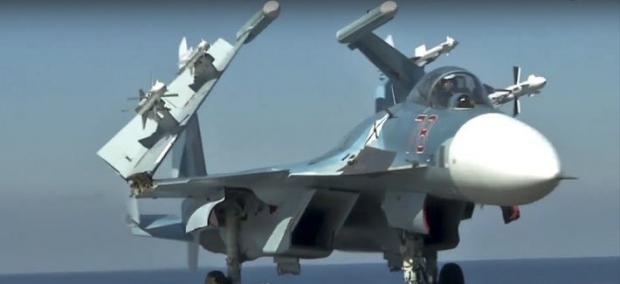
Russian defense companies have created a plane-mounted laser that can hit satellites — at least according to an anonymous source quoted by Russian news agency Interfax. On Saturday, an Interfax report cited the source as saying that weapons maker Almaz-Antey has "completed work on the anti-satellite complex," which includes the laser and associated ground control gear.
Independent and Western observers have not yet verified the claim. But the Russian program does exist. Last April, Almaz-Antey general designer Pavel Sozinov told Russian news agency Ria Novosti that Russian leadership had ordered the company to develop weapons that could interfere electronically with or achieve "direct functional destruction of those elements deployed in orbit."
The program builds off the Soviet-era Beriev A-60, a gas laser fitted inside a heavily modified Ilyushin Il-76MD cargo plane. The effort also bears some resemblance to the Soviets' 1984 Kontakt 30P6 program, which sought to modify a MiG-31D to draw targeting data from the Krona-N space and satellite observation complex and shoot down an enemy satellite with a 79M6 Kontakt missile.