










Breaking News
 This is the future we shall bring into being
 Elon Musk's Vision For The Future Looks Like A Movie
 Phosphorus Munitions Fired by Israel Burn Groves, Orchards in Southern Lebanon
 Iran's IRGC Warns It Will Expand 'Geography of the War' If the US Attacks Again
Top Tech News
 BEYOND THE MOON: NASA plans a nuclear-powered fleet to push DEEPER into space
 Big Oil Backs Mazama's $135 Million Bet On Superhot Geothermal
 Quantum compass takes flight on Northrop's Lumberjack drone
 Terrifying AI Behavior Even Its Creators Couldn't Explain
 WW3 Near-Miss? AI Hallucinated Nuclear Weapons Components Aboard Chinese Vessel Bound For Iran
 Stripe Is Building the Toll Road for the Machine Economy
 Toyota Dakar hopeful swaps twin-turbo V6 for hydrogen fuel cells
 4-min turbo-inflatable cubic camp castle is now available in the USA
 Researchers Used Claude To Hack OpenAI Employee Accounts
 Chinese Scientists Develop New Oil Refining Method That Cuts Energy Use by 90%



California Supreme Court Set For Ruling That Could Cut Pensions For Public Workers
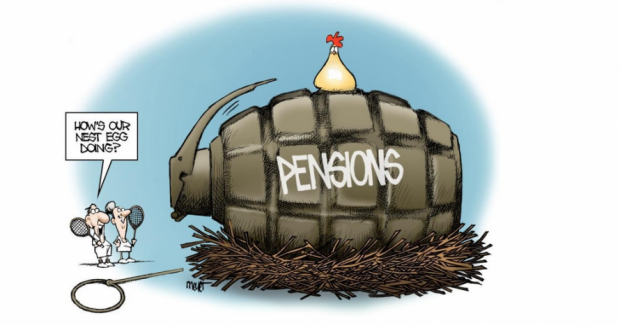
On the other hand, that 'universal rule' also necessarily stipulates that taxpayers can be absolutely steamrolled by whatever tax hikes are necessary to fulfill the bloated pension benefits that unions promise themselves.
Alas, that one 'universal rule' may finally be at risk as the California Supreme Court is currently considering a case which could determine whether taxpayers have an unlimited obligation to simply fork over whatever pension benefits are demanded of them or whether there is some "reasonableness" test that must be applied. Here's more from VC Star:
At issue is the "California Rule," which dates to court rulings beginning in 1947. It says workers enter a contract with their employer on their first day of work, entitling them to retirement benefits that can never be diminished unless replaced with similar benefits.
It's widely accepted that retirement benefits linked to work already performed cannot be touched. But the California Rule is controversial because it prohibits even prospective changes for work the employee has not yet done.