










Breaking News
 This is the future we shall bring into being
 Elon Musk's Vision For The Future Looks Like A Movie
 Phosphorus Munitions Fired by Israel Burn Groves, Orchards in Southern Lebanon
 Iran's IRGC Warns It Will Expand 'Geography of the War' If the US Attacks Again
Top Tech News
 BEYOND THE MOON: NASA plans a nuclear-powered fleet to push DEEPER into space
 Big Oil Backs Mazama's $135 Million Bet On Superhot Geothermal
 Quantum compass takes flight on Northrop's Lumberjack drone
 Terrifying AI Behavior Even Its Creators Couldn't Explain
 WW3 Near-Miss? AI Hallucinated Nuclear Weapons Components Aboard Chinese Vessel Bound For Iran
 Stripe Is Building the Toll Road for the Machine Economy
 Toyota Dakar hopeful swaps twin-turbo V6 for hydrogen fuel cells
 4-min turbo-inflatable cubic camp castle is now available in the USA
 Researchers Used Claude To Hack OpenAI Employee Accounts
 Chinese Scientists Develop New Oil Refining Method That Cuts Energy Use by 90%



OneWeb will fully deploy multi-gigabit global satellite network by 2021...
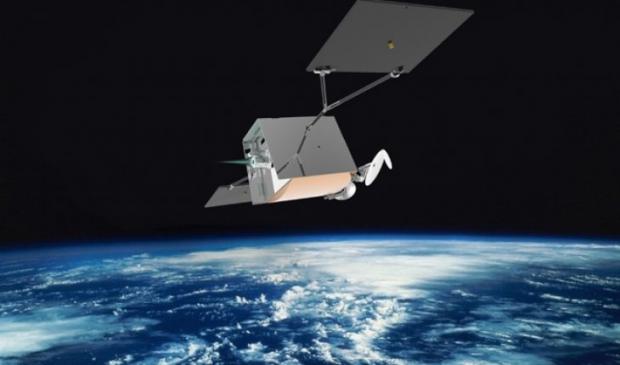
Small, low-cost user terminals will talk to the satellites in the sky, and emit LTE, 3G and WiFi to the surrounding areas, providing high-speed access for everyone.
OneWeb will act as an extension of existing networks, not a replacement. Much of the world is already covered by ISPs and mobile operators' high capacity networks. Our system is designed to extend these networks into rural areas and create affordable connectivity for all. Our small cell terminals and core network will be fully 3GPP compatible, so partner operators will be able to use our infrastructure with their current customers, devices and billing systems. Our terminals will connect to devices either on unlicensed frequencies, or using our partner operators' frequencies to provide better coverage for their customers.
OneWeb's architecture will provide layer 2 and layer 3 services that can be used by any ISP or telecommunication provider to extend any network. Our small cell terminals and core network will be fully 3GPP compatible, allowing OneWeb to work together with providers in any regulatory environment, anywhere in the world.