










Breaking News
 This is the future we shall bring into being
 Elon Musk's Vision For The Future Looks Like A Movie
 Phosphorus Munitions Fired by Israel Burn Groves, Orchards in Southern Lebanon
 Iran's IRGC Warns It Will Expand 'Geography of the War' If the US Attacks Again
Top Tech News
 BEYOND THE MOON: NASA plans a nuclear-powered fleet to push DEEPER into space
 Big Oil Backs Mazama's $135 Million Bet On Superhot Geothermal
 Quantum compass takes flight on Northrop's Lumberjack drone
 Terrifying AI Behavior Even Its Creators Couldn't Explain
 WW3 Near-Miss? AI Hallucinated Nuclear Weapons Components Aboard Chinese Vessel Bound For Iran
 Stripe Is Building the Toll Road for the Machine Economy
 Toyota Dakar hopeful swaps twin-turbo V6 for hydrogen fuel cells
 4-min turbo-inflatable cubic camp castle is now available in the USA
 Researchers Used Claude To Hack OpenAI Employee Accounts
 Chinese Scientists Develop New Oil Refining Method That Cuts Energy Use by 90%



China completing small floating and submersible nuclear reactors around 2020
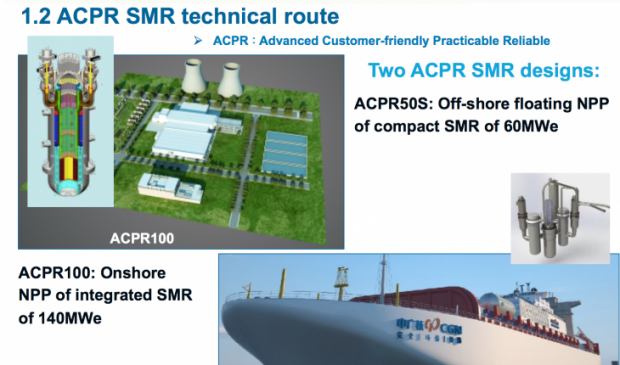
The platforms have two modes – floating and submersible, and the first will be commissioned before 2020.
The platforms will focus on solving power supply issues in the Xisha Islands and other islands in the South China Sea where infrastructure construction is underway.
The nuclear reactor-related technology, when successfully reduced in size, could be later applied to the country's military vessels, including nuclear-powered aircraft carriers or next generation nuclear submarines.
The first floating ACPR50S nuclear reactor to enter service in 2020, with a thermal output of 200 megawatts and electrical output of 60 megawatts.