










Breaking News
 California Declares State Of Emergency Ahead Of Strong El Niño
 'Pausing' Intensifies: OpenAI Unleashes Latest Model Minutes After Dario Dumps Magnum Opus
 Trump Calls For Diesel Export Ban After 3-Hour 'Very Productive' Iran Talks
 Wendy's faces 300 closures across 15 states due to crippling beef prices
Top Tech News
 BEYOND THE MOON: NASA plans a nuclear-powered fleet to push DEEPER into space
 Big Oil Backs Mazama's $135 Million Bet On Superhot Geothermal
 Quantum compass takes flight on Northrop's Lumberjack drone
 Terrifying AI Behavior Even Its Creators Couldn't Explain
 WW3 Near-Miss? AI Hallucinated Nuclear Weapons Components Aboard Chinese Vessel Bound For Iran
 Stripe Is Building the Toll Road for the Machine Economy
 Toyota Dakar hopeful swaps twin-turbo V6 for hydrogen fuel cells
 4-min turbo-inflatable cubic camp castle is now available in the USA
 Researchers Used Claude To Hack OpenAI Employee Accounts
 Chinese Scientists Develop New Oil Refining Method That Cuts Energy Use by 90%



NASA is working on a 'vacuum airship' for Mars missions (and 22 other bonkers ideas)
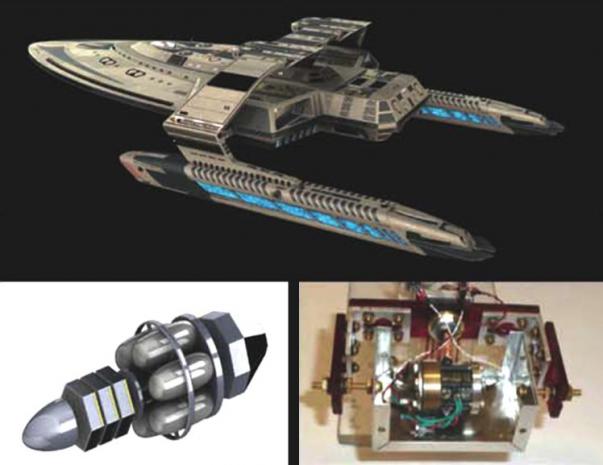
But NASA is actually putting money into investigating the idea – as well as researching an artificial gravity chamber for spacecrafts.
The space agency signed off 22 early stage technology projects this week as part of the The 2017 NASA Innovative Advanced Concepts (NIAC) portfolio of Phase I concepts.
If they're found to be workable, the space agency will allocate more research funding.
Writing about the vacuum airship, NASA says, 'This concept is similar to a standard balloon, whereas a balloon uses helium or hydrogen to displace air and provide lift, a vacuum airship uses a rigid structure to maintain a vacuum to displace air and provide lift.
'Mars appears to have an atmosphere in which the operation of a vacuum airship would not only be possible, but beneficial over a conventional balloon or dirigible.