










Breaking News
 Is Big Pharma Selling Postpartum Depression to New Moms?
 Make Men Men Again: Low T Is Now a National Defense Problem
 Druski: They're Lying To You About Overnight Success!
 $6.27 Diesel Just Hit Harvest. The Grocery Aisle Hasn't Felt It Yet.
Top Tech News
 Tesla Model 3 killer charges from 10 to 97% in just 9 minutes
 World-first unpowered DNA computer sets speed record
 I Power 5 Buildings Off-Grid. Here's How
 The US government is pushing hard to get a working nuclear fission reactor into space by late 2028
 SpaceX Starmind AI in Space Radiator
 China Will Dominate Global Nuclear Energy Through 2035, Analyst Says
 These Absolutely Wild-Looking EVs Are Saudi Arabia's First Homegrown Cars
 BEYOND THE MOON: NASA plans a nuclear-powered fleet to push DEEPER into space
 Big Oil Backs Mazama's $135 Million Bet On Superhot Geothermal
 Quantum compass takes flight on Northrop's Lumberjack drone


Burn Patients Are Healing Faster With Less Pain Thanks To Fish "Gauze"
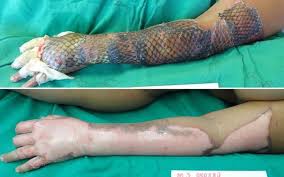

Credit: Stat News
In some developing countries, the skin of animals has often been used on patients with severe burns because they lack the skin resources that are more widely available in developed nations, like the U.S. In Brazil, there are a mere 3 functional skin banks in the entire country, which meet only 1 percent of the demand for skin for burn victims.
Typically, human skin, pig skin, and artificial alternatives are used in the treatment for victims, but with so few resources in Brazil, doctors have been forced to go with the more painful approach, instead using cream and gauze on the wounds. With this method, the gauze must be unwrapped and changed every single day, which is extremely painful for the patients, who are often seen writhing and screaming in pain.
What's worse is that the cream and gauze only help keep the wound clean; Dr. Jeanne Lee, interim burn director at the the regional burn center at the University of California at San Diego, said that this method doesn't necessarily help the burns in the healing process nor does it remove nonliving tissue from the wound like skin alternatives do. It's the only option that they've had—until now.

Credit: Stat News