










Breaking News
 Is Big Pharma Selling Postpartum Depression to New Moms?
 Make Men Men Again: Low T Is Now a National Defense Problem
 Druski: They're Lying To You About Overnight Success!
 $6.27 Diesel Just Hit Harvest. The Grocery Aisle Hasn't Felt It Yet.
Top Tech News
 Tesla Model 3 killer charges from 10 to 97% in just 9 minutes
 World-first unpowered DNA computer sets speed record
 I Power 5 Buildings Off-Grid. Here's How
 The US government is pushing hard to get a working nuclear fission reactor into space by late 2028
 SpaceX Starmind AI in Space Radiator
 China Will Dominate Global Nuclear Energy Through 2035, Analyst Says
 These Absolutely Wild-Looking EVs Are Saudi Arabia's First Homegrown Cars
 BEYOND THE MOON: NASA plans a nuclear-powered fleet to push DEEPER into space
 Big Oil Backs Mazama's $135 Million Bet On Superhot Geothermal
 Quantum compass takes flight on Northrop's Lumberjack drone


The chemistry behind cannabinoids explains how CBDs are saving lives
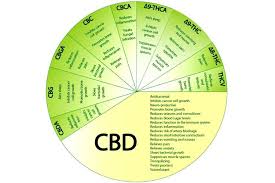
(Natural News) Scientists are finally beginning to uncover some of the chemical mechanisms underlying the powerful medical benefits of marijuana and its cannabinoid compounds.
The breakthrough came with the discovery of the body's endocannabinoid system, a biological system based around signaling molecules highly similar to many of the phytocannabinoid (plant-based cannabinoid) compounds found in marijuana (cannabis). Cannabinoid receptors are found on nearly every cell in the body, enabling the endocannabinoid system to play a key role in regulating everything from sleep and metabolism, to appetite and immune function.
Of the more than 500 identified chemicals naturally present in the cannabis plant, at least 85 are cannabinoids.
Cannabinoids restore the body's natural balance
Two classes of cannabinoid (CB) receptors have been discovered in the body, though there may be others. CB1 receptors are mostly found in the nervous system, the endocrine system (glands), the internal organs and the connective tissues and gonads. CB2 receptors are mostly found in cells and organs that play a role in the immune system.
One of the endocannabinoid system's main functions appears to be the maintenance of homeostasis – that is, keeping the internal environment of the body stable even as the external environment is constantly changing.
For example, when the body experiences an injury it reacts with a variety of immune responses – such as the inflammatory response – that are meant to heal the injury and repel dangerous pathogens. Research now suggests that when endocannabinoids bind to CB receptors at injury sites, they function to tamp down this immune response – thereby helping prevent an overactive inflammatory or other immune response that could end up producing more injury or even an autoimmune disorder.
Cannabinoid receptors on tumor cells appear to serve a similar role in fighting cancer. Endocannabinoids that bind to these locations help trigger cell death, balancing out the tumor's previously unregulated cell replication.
Even the FDA admits the benefits of THC … sort of
Phytocannabinoids from the cannabis plant also bind to CB receptors, and can thereby give a boost to the systems the body uses to maintain its own health.
The two most well-studied phytocannabinoids are tetrahydrocannabinol (THC), which is responsible for the marijuana "high," and cannabidiol (CBD), which has no psychoactive effects, and also seems to dampen the psychoactive potency of THC. Other identified phytocannabinoids include cannabinol (CBN), a mildly psychoactive chemical produced from the oxidation of THC, and cannabigerol (CBG), a non-psychoactive compound that reduces pressure within the eye, and may be partially responsible for marijuana's effectiveness as a glaucoma treatment.