










Breaking News
 The Homeless Industrial Complex:
 The Lucid Cosmos Will Have More Range Than Any Tesla
 Trump Admin Ends Medicaid Funding For Sex-Change Procedures On Kids
 Strong 3D printable elastic polymer resists damage
Top Tech News
 Vitalik Buterin Says Ethereum Is Betting Its Future On Quantum Security And AI
 Everything You Wanted To Know About Building A Cheap AI Setup (That Still Works)...
 If They Were Human, They'd Be Arrested. Experts Respond To Rogue AI Breaches
 Sodium Ion Batteries Will be 80% Cheaper & Last LONGER!
 German startup SAXON Q has introduced a diamond-based quantum computing system...
 Elon Musk To Build The Largest Building In The World - 100 Million Square Feet
 Bitcoin 'Red Team' Says AI Is Finding 100s Of Critical Exploits Across Core Projects
 EG4 Power Pro VS Ruixu Lithi VS Yixiang Budget Battery! Best Selling Battery Showdown!
 Insect wings can kill bacteria without any chemicals!
 Tesla Never Made An Electric Jet Boat, So This YouTuber Built One Himself



Action of "gatekeeper" cells could be ground zero for Alzheimer's
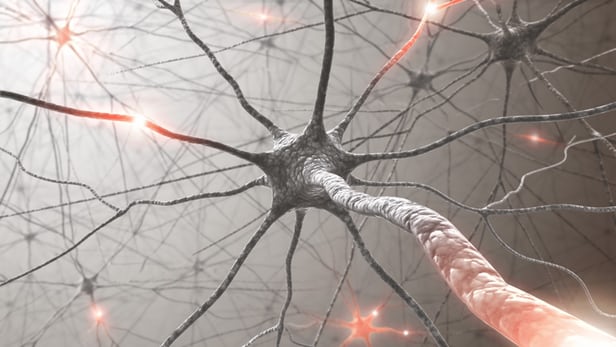
In the hunt for a cause and cure for Alzheimer's disease and other neurodegenerative ailments, much attention has been focused on sticky proteins called beta-amyloid plaques that build up in the brain and cause nerve damage. A new potential target has been identified by researchers however, in so called "gatekeeper" cells that control the flow of oxygen in the brain.
The cells are known as pericytes and they are found around blood vessels. When they are functioning properly, they control the flow of blood to different parts of the brain by expanding and contracting. When they're not working, or not in plentiful enough supply, they can literally suffocate neurons.
"Pericyte degeneration may be ground zero for neurodegenerative disorders like Alzheimer's disease, ALS and possibly others," said Berislav Zlokovic, senior author of the pericyte study and director of the Zilkha Neurogenetic Institute at the Keck School of Medicine at the University of Southern California. "A glitch with gatekeeper cells that surround capillaries may restrict blood and oxygen supply to active areas of the brain, gradually causing neuron loss that might have important implications for Alzheimer's disease."
To find out if pericytes should indeed be explored as a possible cause of Alzheimer's disease, the USC researchers bioengineered mice to have 25 percent fewer of them. They then prodded the hind legs of the young specimens with an electric stimulus. The pericyte-lacking mice showed an approximately 30 percent reduction in blood flow in the brain versus normal mice, because their capillaries took about 6.5 seconds longer to open up in the face of the stimulus.
As the mice aged, the cerebral blood-flow response got even worse, dipping to 58 percent lower than their unaffected brethren at six to eight months of age.