










Breaking News
 California Declares State Of Emergency Ahead Of Strong El Niño
 'Pausing' Intensifies: OpenAI Unleashes Latest Model Minutes After Dario Dumps Magnum Opus
 Trump Calls For Diesel Export Ban After 3-Hour 'Very Productive' Iran Talks
 Wendy's faces 300 closures across 15 states due to crippling beef prices
Top Tech News
 BEYOND THE MOON: NASA plans a nuclear-powered fleet to push DEEPER into space
 Big Oil Backs Mazama's $135 Million Bet On Superhot Geothermal
 Quantum compass takes flight on Northrop's Lumberjack drone
 Terrifying AI Behavior Even Its Creators Couldn't Explain
 WW3 Near-Miss? AI Hallucinated Nuclear Weapons Components Aboard Chinese Vessel Bound For Iran
 Stripe Is Building the Toll Road for the Machine Economy
 Toyota Dakar hopeful swaps twin-turbo V6 for hydrogen fuel cells
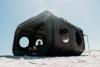 4-min turbo-inflatable cubic camp castle is now available in the USA
 Researchers Used Claude To Hack OpenAI Employee Accounts
 Chinese Scientists Develop New Oil Refining Method That Cuts Energy Use by 90%



'Cloaking' Film for Windows Blacks Out the Screens Within
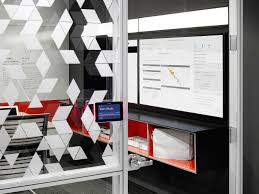
THE MODERN WORKPLACE has a cultural problem. Open-plan offices and glass-walled conference rooms promote transparency, but they also make it impossible to conduct business privately. Anything requiring discretion—quarterly reports, year-end bonuses, or secret projects—calls for ominous workarounds. "We've all had the experience of walking into an office and there's brown butcher paper taped up to the conference room glass," says Matt Mead. "Everyone's antenna kind of goes up."
Mead runs the in-house design incubator at office equipment company Steelcase, which created a solution to this problem: Casper Privacy Film. Apply it to the walls of the office fishbowl and you can see everything in there except LED and LCD screens. The CEO can run through the quarterly budget slides without concern, because they'll look like black boxes to anyone looking in from the outside. The idea, Steelcase suggests, is that offices don't have to sacrifice security for transparency, and vice versa.

SLIDE:1 / OF4. Caption:DESIGNTEX

SLIDE:2 / OF4. Caption:DESIGNTEX

SLIDE:3 / OF4. Caption:DESIGNTEX

SLIDE:4 / OF4. Caption:DESIGNTEX

Casper, developed by Steelcase subsidiary Designtex, comes in two layers. A transparent sheet, available in 15 loosely arranged geometric prints, covers the exterior side of the glass. A "cloaking" film coats the interior. The company won't say how the Casper technology works or what's in the film, but it blocks the wavelengths of light emitted by LED and LCD screens. Screens stay camouflaged, while the room's inhabitants, and their body language and facial expressions, remain visible. In function, Casper earns comparisons to privacy screens that you attach to your laptop. Those deter shoulder surfers, as well, but use lenticular graphics to block out any peripheral peeping.