










Breaking News
 The Evil Within, Part 4: The Welfare State
 Watch Live: Jack Smith Testifies Before Senate Judiciary Committee
 This Invisible Thing Hitting Your Brain Every Day Could Be Why You Suffer From Brain Fog...
 Pete Hegseth unleashes on military high command with massive PURGE of generals amid Iran war
Top Tech News
 Tesla Model 3 killer charges from 10 to 97% in just 9 minutes
 World-first unpowered DNA computer sets speed record
 I Power 5 Buildings Off-Grid. Here's How
 The US government is pushing hard to get a working nuclear fission reactor into space by late 2028
 SpaceX Starmind AI in Space Radiator
 China Will Dominate Global Nuclear Energy Through 2035, Analyst Says
 These Absolutely Wild-Looking EVs Are Saudi Arabia's First Homegrown Cars
 BEYOND THE MOON: NASA plans a nuclear-powered fleet to push DEEPER into space
 Big Oil Backs Mazama's $135 Million Bet On Superhot Geothermal
 Quantum compass takes flight on Northrop's Lumberjack drone


New Technology Allows Human Activity To Generate Renewable Energy
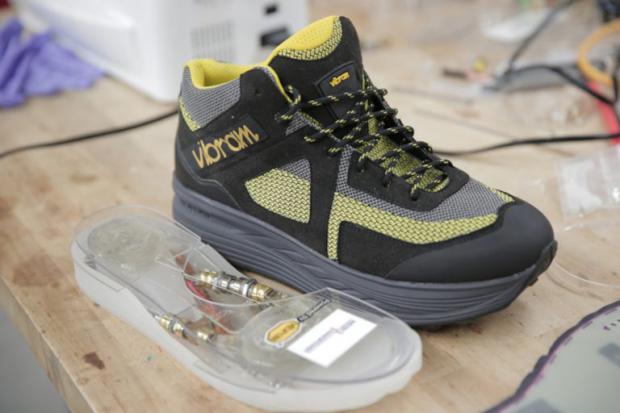
A revelation in sustainable energy has just been discovered which means that people could soon be generating electricity through the act of walking. A team of engineers at the University of Wisconsin-Madison have recently developed a unique flooring made of entirely renewable and economical material, which creates energy through footsteps. Similarly to this, another group of mechanical engineers at the university had developed a technology which allows energy to be generated through a pair of shoes.
Xudong Wang, who is the lead researcher of the project, believes that his new technology could revolutionize the way that people approach energy. He created his innovative technology using common waste materials, including wood pulp made of cellulose nanofibers which are very inexpensive, renewable, and often retrieved from waste products of industries. This creates an electrical charge when the chemically treated fibers come into contact with untreated fibers. As the nanofibres are put into the flooring, energy is produced which can be used for lighting or even to charge batteries.
The science and innovation website Grendz commented on the clean energy discovery by saying,
"Wang's research centers around using vibration to generate electricity. For years, he has been testing different materials in an effort to maximize the merits of a technology called a triboelectric nanogenerator (TENG). Triboelectricity is the same phenomenon that produces static electricity on clothing. Chemically treated cellulose nanofibers are a simple, low-cost and effective alternative for harnessing this broadly existing mechanical energy source."
This new technology could even rival wind and solar energy as it does not need to rely on specific weather conditions. Researchers have also suggested that there is more potential for this sustainable energy than the current fossil fuel reserves. Wang said, "Roadside energy harvesting requires thinking about the places where there is abundant energy we could be harvesting. We've been working a lot on harvesting energy from human activities. One way is to build something to put on people, and another way is to build something that has constant access to people. The ground is the most-used place