










Breaking News
 The Homeless Industrial Complex:
 The Lucid Cosmos Will Have More Range Than Any Tesla
 Trump Admin Ends Medicaid Funding For Sex-Change Procedures On Kids
 Strong 3D printable elastic polymer resists damage
Top Tech News
 Vitalik Buterin Says Ethereum Is Betting Its Future On Quantum Security And AI
 Everything You Wanted To Know About Building A Cheap AI Setup (That Still Works)...
 If They Were Human, They'd Be Arrested. Experts Respond To Rogue AI Breaches
 Sodium Ion Batteries Will be 80% Cheaper & Last LONGER!
 German startup SAXON Q has introduced a diamond-based quantum computing system...
 Elon Musk To Build The Largest Building In The World - 100 Million Square Feet
 Bitcoin 'Red Team' Says AI Is Finding 100s Of Critical Exploits Across Core Projects
 EG4 Power Pro VS Ruixu Lithi VS Yixiang Budget Battery! Best Selling Battery Showdown!
 Insect wings can kill bacteria without any chemicals!
 Tesla Never Made An Electric Jet Boat, So This YouTuber Built One Himself



First of Its Kind Study Shows that Change in Diet Alone -- Not Drugs -- is Curing Diseases
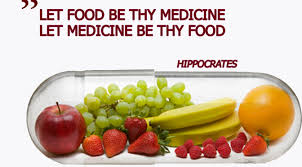
"Let medicine be thy food and let food be thy medicine." – Hippocrates
In the fourth century BCE, the most famous Greek physician made the bold claim that disease was caused naturally, not by the gods. Environment, diet and living habits all played a part in the health of a person.
The tools and techniques of modern science have allowed us to uncover many secrets of nutrition. But we're still just scratching the surface of the complex ways in which food compounds interact with the body.
As Mat Edelson wrote for Hopkins Medicine, the rise of corporatism had a big influence on medicine.
"Big pharma was scarce with cash, because they can't patent a food's natural properties. And from a practical viewpoint, studying food with its thousands of chemicals and nutrients is incredibly complex. By comparison, targeting and studying a single drug for efficacy in a double-blind model was far more straightforward and lucrative to both researchers and industry."
Granted, some pharmaceutical products have given a better quality of life to many people, but the singular focus of making a pill to treat disease has come at the cost of virtually ignoring food as medicine.
Dr. David Suskind, a gastroenterologist at Seattle Children's, is breaking the mold. Suskind has produced the first clinical evidence that food can indeed be medicine.
"In a first-of-its-kind-study led by Suskind, published today in the Journal of Clinical Gastroenterology, diet alone was shown to bring pediatric patients with active Crohn's and [ulcerative colitis] into clinical remission…
In the small, prospective study, patients were put on a special diet called the specific carbohydrate diet (SCD) for 12 weeks as the sole intervention to treat their Crohn's or UC. SCD is a nutritionally balanced diet that removes grains, dairy, processed foods and sugars, except for honey. The diet promotes only natural, nutrient-rich foods, which includes vegetables, fruits, meats and nuts.
At the end of the 12 weeks, eight out of the 10 patients who finished the study showed significant improvement and achieved remission from the dietary treatment alone."
"This changes the paradigm for how we may choose to treat children with inflammatory bowel disease," Suskind said.
More studies will need to be done for confirmation, but these results will certainly draw attention for researchers willing to step outside of the pharmaceutical model.
Food as medicine may prove to have applications outside of inflammatory bowel disease (IBD), as many diseases may be related to chronic inflammation. For example, the charred meat prevalent in American diets is associated with prostate inflammation which can lead to prostate cancer.