










Breaking News
 No Benefits: Why Most Americans Hate The Idea Of AI Data Centers
 Are America's Youth Really Embracing Socialism?
 Are We About to See a Foreclosure WAVE Hit the US Housing Market?
 They Rolled Out the Relics - Then Cut the Working-Lands Money
Top Tech News
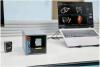 World's smallest CT scanner fits in the palm of your hand
 The Tesla Roadster will blow people's minds
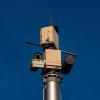 Peter Thiel-Funded Company Anduril to Triple the Number of Autonomous Surveillance Towers...
 Quantum computing may soon become part of the microscope itself.
 Volkswagen Just Unveiled The Most Efficient EV Ever Tested
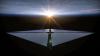 NASA Super Light Solar Sail Project Will Be 12-40 Times Lighter and Faster
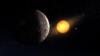 Space Telescope Interferometer to Image Exoplanet Continents
 Twenty-five years of "temporary": how 9/11 built a surveillance state Americans never vote
 I'll Never Buy Another WALMART Battery!
 Shoei GT-Air 3 Smart helmet drops with built-in AR for $1,500



Magnetic and modular LEDs can cover a wall in light
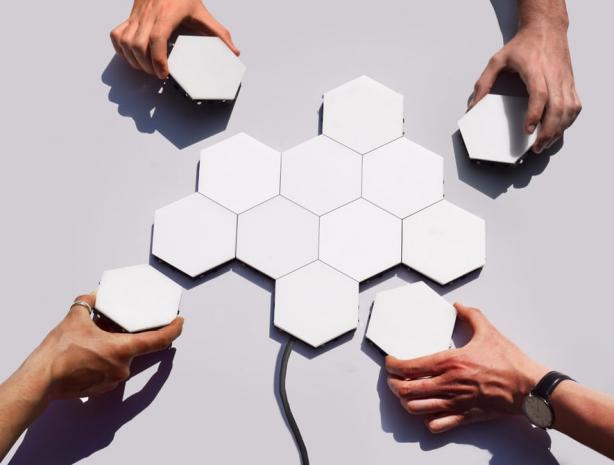
That is the principle behind the Helios modular LED lighting system, where hThe Helios system is similar to the Nanoleaf Aurora Smarter Kit, which uses 8.25 x 9.4 in (21 x 24 cm) triangular panels in a similar way. The hexagonal Helios modules are smaller, though, at 4.3 in (11 cm) across their longest span and 0.4-in (1-cm) thick, and do not feature the smart and color changing properties of the Nanoleaf system. They are designed less for eye-catching aesthetics and more as a functional and elegant means of lighting a room.
Dyena, the firm behind the Helios system, explains that the aim is for users to be able to turn the interior architecture of a space into a light source. A few of the modules could be use together at a desk to provide light when working or a whole wall could be covered in them.