










Breaking News
 No Benefits: Why Most Americans Hate The Idea Of AI Data Centers
 Are America's Youth Really Embracing Socialism?
 Are We About to See a Foreclosure WAVE Hit the US Housing Market?
 They Rolled Out the Relics - Then Cut the Working-Lands Money
Top Tech News
 World's smallest CT scanner fits in the palm of your hand
 The Tesla Roadster will blow people's minds
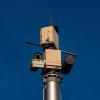 Peter Thiel-Funded Company Anduril to Triple the Number of Autonomous Surveillance Towers...
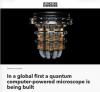 Quantum computing may soon become part of the microscope itself.
 Volkswagen Just Unveiled The Most Efficient EV Ever Tested
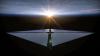 NASA Super Light Solar Sail Project Will Be 12-40 Times Lighter and Faster
 Space Telescope Interferometer to Image Exoplanet Continents
 Twenty-five years of "temporary": how 9/11 built a surveillance state Americans never vote
 I'll Never Buy Another WALMART Battery!
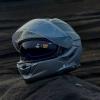 Shoei GT-Air 3 Smart helmet drops with built-in AR for $1,500



Extraterrestrial Gold Rush: What's Next for the Space Mining Industry?
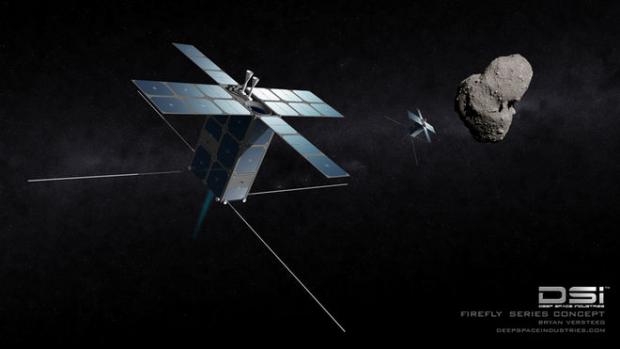
As such, multiple companies are now trying to initiate a space mining industry, which could provide those basic resources for space travelers, or for robotic space operations. In the future, asteroids or the moon could even provide humans with resources that are rare on Earth, such as precious metals.
But there are major hurdles that need to be overcome before space mining can get off the ground, so to speak. Representatives from various companies pursuing space mining activities recently spoke about the state of the industry here at the 2016 Space Commerce Conference and Exposition.
Many of the speakers on the panel made comparisons between space mining and terrestrial coal mining or offshore oil and gas drilling. Among other issues, that comparison leads to the idea of a mining supply chain, which refers to the activities that support the actual extraction of the desired materials. In terrestrial mining, that could mean everything from the team that surveys the land to find the best place to extract material, to the company that supplies food to the miners.