










Breaking News
 The Homeless Industrial Complex:
 The Lucid Cosmos Will Have More Range Than Any Tesla
 Trump Admin Ends Medicaid Funding For Sex-Change Procedures On Kids
 Strong 3D printable elastic polymer resists damage
Top Tech News
 Vitalik Buterin Says Ethereum Is Betting Its Future On Quantum Security And AI
 Everything You Wanted To Know About Building A Cheap AI Setup (That Still Works)...
 If They Were Human, They'd Be Arrested. Experts Respond To Rogue AI Breaches
 Sodium Ion Batteries Will be 80% Cheaper & Last LONGER!
 German startup SAXON Q has introduced a diamond-based quantum computing system...
 Elon Musk To Build The Largest Building In The World - 100 Million Square Feet
 Bitcoin 'Red Team' Says AI Is Finding 100s Of Critical Exploits Across Core Projects
 EG4 Power Pro VS Ruixu Lithi VS Yixiang Budget Battery! Best Selling Battery Showdown!
 Insect wings can kill bacteria without any chemicals!
 Tesla Never Made An Electric Jet Boat, So This YouTuber Built One Himself



Shocking new study shows chemo kills half of cancer patients, not cancer itself
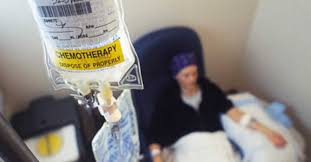
(NaturalNews) A new landmark study found that up to 50 percent of people who receive chemotherapy are killed by the treatment, not cancer itself. For the first time, researchers from Public Health England and Cancer Research U.K. examined the numbers of cancer patients who died within 30 days of starting chemotherapy.
Chemotherapy is an invasive and toxic treatment to kill cancer cells. Unfortunately, chemo doesn't differentiate between a cancerous or a healthy cell. As a result, it kills all living matter on its way. Furthermore, chemo drugs are known to damage the immune system. This makes cancer patients more vulnerable to infections, which may contribute to the high mortality rates.
Chemo kills within the first 30 days
The study, which was published in The Lancet Oncology medical journal, looked at more than 23,000 women with breast cancer and nearly 10,000 men with lung cancer who underwent chemotherapy in 2014. Of those treated with chemotherapy, 1,383 died within 30 days.
As reported by the Telegraph, on average 8.4 percent of lung cancer patients and 2.4 percent of breast cancer patients died within a month. That number, however, depended hugely on the hospital.
The mortality rate at Lancashire Teaching Hospitals for those undergoing palliative chemotherapy for lung cancer, for instance, was 28 percent. But in Milton Keynes the death rate for lung cancer treatment went up to 50.9 percent.
According to Dr. Jem Rashbass, Cancer Lead for Public Health England, chemotherapy is a crucial part of cancer treatment. He, however, admitted that chemotherapy drugs are potent chemical substances with significant side effects.
He further noted that getting the balance right to aggressively treat patients can be hard. Therefore, hospitals with death rates outside the expected range have had the findings shared with them. Also, they have been asked to review their practice and data.
Doctors should be more careful about pushing toxic treatment
Furthermore, the authors of the study have advised physicians to exercise more caution in selecting which patients should receive chemotherapy. They noted that some people, such as older and more infirm patients, might be better off without it.
"I think it's important to make patients aware that there are potentially life threatening downsides to chemotherapy. And doctors should be more careful about who they treat with chemotherapy," said Professor David Dodwell, Institute of Oncology, St James Hospital, Leeds, UK.
All hospitals involved stated that since they received the notification of the high death rates, they have reviewed the information and remain certain chemotherapy was safe in all administered cases.
While chemotherapy has been used as a cancer treatment for decades, scientists are still looking for safer and more effective treatments or a possible cure. In May 2016, a study conducted at the Duke University Medical Center found that an antibody, developed from the human body's immune system, appeared to specifically target cancer cells without doing damage to healthy cells.