










Breaking News
 The Tesla Semi Just Got A Massive Boost From The Biggest U.S. Electric Truck Order Ever
 California Declares State Of Emergency Ahead Of Strong El Niño
 'Pausing' Intensifies: OpenAI Unleashes Latest Model Minutes After Dario Dumps Magnum Opus
 Trump Calls For Diesel Export Ban After 3-Hour 'Very Productive' Iran Talks
Top Tech News
 BEYOND THE MOON: NASA plans a nuclear-powered fleet to push DEEPER into space
 Big Oil Backs Mazama's $135 Million Bet On Superhot Geothermal
 Quantum compass takes flight on Northrop's Lumberjack drone
 Terrifying AI Behavior Even Its Creators Couldn't Explain
 WW3 Near-Miss? AI Hallucinated Nuclear Weapons Components Aboard Chinese Vessel Bound For Iran
 Stripe Is Building the Toll Road for the Machine Economy
 Toyota Dakar hopeful swaps twin-turbo V6 for hydrogen fuel cells
 4-min turbo-inflatable cubic camp castle is now available in the USA
 Researchers Used Claude To Hack OpenAI Employee Accounts
 Chinese Scientists Develop New Oil Refining Method That Cuts Energy Use by 90%



Next-gen concrete bends instead of cracking
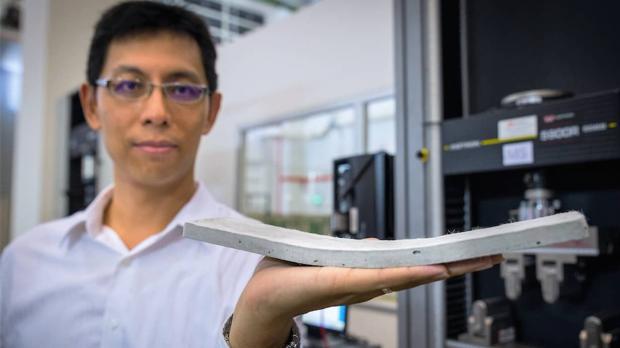
Scientists from Singapore's Nanyang Technological University, however, are developing an alternative. They've created bendable concrete that they say could be easily applied in the form of relatively thin, light paving slabs.
Ordinarily, concrete is made from a mix of cement, gravel, sand and water. The new material, known as ConFlexPave, additionally contains polymer microfibers. These are thinner than the width of a human hair, and serve to distribute loads evenly across the entire slab, instead of keeping them focused in one location.
As a result, the ConFlexPave is reportedly "tough as metal and at least twice as strong as conventional concrete under bending." As an added benefit, the microfibers are also claimed to enhance the material's skid resistance.