










Breaking News
 The Tesla Semi Just Got A Massive Boost From The Biggest U.S. Electric Truck Order Ever
 California Declares State Of Emergency Ahead Of Strong El Niño
 'Pausing' Intensifies: OpenAI Unleashes Latest Model Minutes After Dario Dumps Magnum Opus
 Trump Calls For Diesel Export Ban After 3-Hour 'Very Productive' Iran Talks
Top Tech News
 BEYOND THE MOON: NASA plans a nuclear-powered fleet to push DEEPER into space
 Big Oil Backs Mazama's $135 Million Bet On Superhot Geothermal
 Quantum compass takes flight on Northrop's Lumberjack drone
 Terrifying AI Behavior Even Its Creators Couldn't Explain
 WW3 Near-Miss? AI Hallucinated Nuclear Weapons Components Aboard Chinese Vessel Bound For Iran
 Stripe Is Building the Toll Road for the Machine Economy
 Toyota Dakar hopeful swaps twin-turbo V6 for hydrogen fuel cells
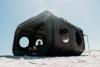 4-min turbo-inflatable cubic camp castle is now available in the USA
 Researchers Used Claude To Hack OpenAI Employee Accounts
 Chinese Scientists Develop New Oil Refining Method That Cuts Energy Use by 90%



Shipping container transformed into a tiny house
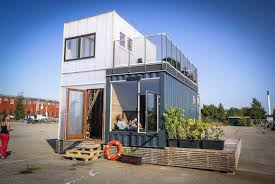
With this in mind, Brighton, Colorado-based tiny house firm Walker Wilderness Enterprises recently completed the aptly-named Container Tiny House which can be configured to run on or off-the-grid.
The Container Tiny House is based on a large 40 ft (12 m)-long high cube container and has a single door and several operable windows installed. The interior comprises a total floorspace of 320 sq ft (29 sq m).
We've written at length about our appreciation for shipping container-based architecture, but their lack of insulation poses real concerns – just try walking inside a container on a hot day and it's obvious that it would need significant modification to make it suitable for full-time living. A few windows simply won't cut it.
To address this, Walker Wilderness Enterprises says it has framed, drywalled, and insulated the container home with 3 - 4 in (7.62 - 10.16 cm) of closed cell spray foam insulation in an attempt to keep the heat and cold at bay.