










Breaking News
 Is Big Pharma Selling Postpartum Depression to New Moms?
 Make Men Men Again: Low T Is Now a National Defense Problem
 Druski: They're Lying To You About Overnight Success!
 $6.27 Diesel Just Hit Harvest. The Grocery Aisle Hasn't Felt It Yet.
Top Tech News
 Tesla Model 3 killer charges from 10 to 97% in just 9 minutes
 World-first unpowered DNA computer sets speed record
 I Power 5 Buildings Off-Grid. Here's How
 The US government is pushing hard to get a working nuclear fission reactor into space by late 2028
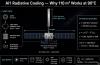 SpaceX Starmind AI in Space Radiator
 China Will Dominate Global Nuclear Energy Through 2035, Analyst Says
 These Absolutely Wild-Looking EVs Are Saudi Arabia's First Homegrown Cars
 BEYOND THE MOON: NASA plans a nuclear-powered fleet to push DEEPER into space
 Big Oil Backs Mazama's $135 Million Bet On Superhot Geothermal
 Quantum compass takes flight on Northrop's Lumberjack drone


Musk and Bezos on Conquering the Final Frontier of Space
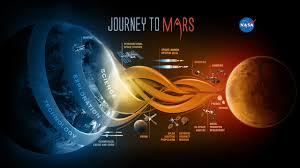
Musk: We intend to launch people to Mars in 2024 … Elon Musk will send a mission to Mars without people on it — on the Flying Dragon version 2 rocket — starting in 2018 and launch a rocket headed there every 26 months. – CNBC
Elon Musk and Jeff Bezos believe that the final frontier of space will soon be penetrated.
Musk (see excerpt above) intends to send people to Mars in eight years' time. Bezos wants to zone space for industry.
Musk's plan:
"[Our rocket] is intended to carry astronauts to the International Space Station," said Musk at the Code Conference in Rancho Palos Verdes, Calif. on Wednesday night. "But we are going to send one to Mars in 2018."
Bezos:
Onstage at the Code Conference on Tuesday, the Amazon founder and CEO said that we have to start bringing parts of the industrial economy to space in order "to save Earth."
"Let me assure you, this is the best planet. We need to protect it, and the way we will is by going out into space," he told Recode Editor at large Walt Mossberg.
Bezos's idea is that space is ideal for "gigantic chip factories." And that the entire earth should be zoned "residential" or "light industry."
Heavy industry should be reserved for space, along with solar power, which would be much more effective when solar power "is available 24/7."
Bezos's fortune-telling is fairly run-of-the-mill. His timeline is in the "hundreds" of years and he doesn't provide much in the way of detail.
Musk is an entirely different matter. Almost everything Musk does ends up being funded by the government, from his cars to his ambitious battery factor and Space X itself.
Perhaps this is where the confidence to suggest outlandish schemes comes from.
On 23 December 2008, NASA awarded a $1.6 billion Commercial Resupply Services (CRS) contract to SpaceX, with contract options that could potentially increase the maximum contract value to $3.1 billion. The contract called for 12 flights to the ISS, with a minimum of 20,000 kg (44,000 lb) of cargo carried to the ISS. (-Wikipedia)
Musk plans to launch a rocket "carrying human cargo" by 2024. This would be quite an accomplishment given that NASA hasn't even been back to the moon yet. Nonetheless, NASA is happy to throw $3 billion in his direction.
For critics, the deadly radiation of the Van Allen radiation belt, billions of tiny meteors and unimaginable heat all make human space travel improbable if not impossible.
These individuals may believe the great feats of space acrobatics are actually performed in gigantic swimming pools on earth. And the fabulous scenarios taking place on the moon and Mars are actually filmed on earth as well.
And for some, such achievements are undercut by images of what seems to be a squirrel (or rat) crouching between rocks on "Mars."
