










Breaking News
 DIGGER | Official Trailer
 Noah's Ark resting place '100% confirmed' after 4,300 years as astonishing 'man-made
 White House Cancels Coverage For 750,000 ACA Enrollees, Citing Fraud
 Elon Musk Is Powering The American Renaissance
Top Tech News
 BEYOND THE MOON: NASA plans a nuclear-powered fleet to push DEEPER into space
 Big Oil Backs Mazama's $135 Million Bet On Superhot Geothermal
 Quantum compass takes flight on Northrop's Lumberjack drone
 Terrifying AI Behavior Even Its Creators Couldn't Explain
 WW3 Near-Miss? AI Hallucinated Nuclear Weapons Components Aboard Chinese Vessel Bound For Iran
 Stripe Is Building the Toll Road for the Machine Economy
 Toyota Dakar hopeful swaps twin-turbo V6 for hydrogen fuel cells
 4-min turbo-inflatable cubic camp castle is now available in the USA
 Researchers Used Claude To Hack OpenAI Employee Accounts
 Chinese Scientists Develop New Oil Refining Method That Cuts Energy Use by 90%



3D Fashion project set to revolutionize clothing industry
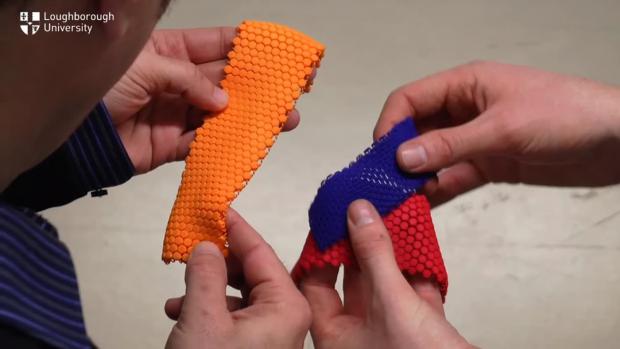
The idea is to cut out the waste of the clothing industry and hopefully arrive at the project's eventual goal, which is to provide a system for personalized, printed polymer clothing that takes just 24 hours to produce.
The clothing industry is huge, with consumers in the UK alone spending a whopping £44 billion (US$63 billion) on new garments each and every year. That consumption also generates 1.8 million tonnes (1.98 million tons) of waste material, and uses up 6.4 billion m3 of water.
Researchers at Loughborough University believe that 3D printing, also known as additive manufacturing, could truly revolutionize the industry. They note that while the practice of making clothes has been streamlined and manufacturing costs have been lowered, the underlying processes and techniques haven't really changed since the 19th century.