










Breaking News
 White House Cancels Coverage For 750,000 ACA Enrollees, Citing Fraud
 Elon Musk Is Powering The American Renaissance
 BBC Memory-Holes Comedy Sketches That Satirized Racism
 China Ranked #1 In World At Math; USA 27th...
Top Tech News
 BEYOND THE MOON: NASA plans a nuclear-powered fleet to push DEEPER into space
 Big Oil Backs Mazama's $135 Million Bet On Superhot Geothermal
 Quantum compass takes flight on Northrop's Lumberjack drone
 Terrifying AI Behavior Even Its Creators Couldn't Explain
 WW3 Near-Miss? AI Hallucinated Nuclear Weapons Components Aboard Chinese Vessel Bound For Iran
 Stripe Is Building the Toll Road for the Machine Economy
 Toyota Dakar hopeful swaps twin-turbo V6 for hydrogen fuel cells
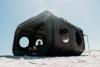 4-min turbo-inflatable cubic camp castle is now available in the USA
 Researchers Used Claude To Hack OpenAI Employee Accounts
 Chinese Scientists Develop New Oil Refining Method That Cuts Energy Use by 90%



A touch of silver lets smart windows go from clear to translucent

Generally speaking, smart windows rely on electrochemical reactions in order to change transparency. This can make for an expensive manufacturing process, along with the use of sometimes-toxic substances.
The Harvard technology is different. It incorporates a sheet of regular glass or plastic, sandwiched between two clear elastomer layers that have been sprayed with silver nanowires. Those wires are small enough that they don't affect light transmission on their own.
However, when an electrical current is applied (simply by flicking a switch), the nanowires on either side of the glass are drawn towards one another. This causes them to compress the elastomer layers, distorting them in the process. As a result, the window goes from being completely clear to taking on a cloudy frosted-glass appearance.