










Breaking News
 Is Big Pharma Selling Postpartum Depression to New Moms?
 Make Men Men Again: Low T Is Now a National Defense Problem
 Druski: They're Lying To You About Overnight Success!
 $6.27 Diesel Just Hit Harvest. The Grocery Aisle Hasn't Felt It Yet.
Top Tech News
 Tesla Model 3 killer charges from 10 to 97% in just 9 minutes
 World-first unpowered DNA computer sets speed record
 I Power 5 Buildings Off-Grid. Here's How
 The US government is pushing hard to get a working nuclear fission reactor into space by late 2028
 SpaceX Starmind AI in Space Radiator
 China Will Dominate Global Nuclear Energy Through 2035, Analyst Says
 These Absolutely Wild-Looking EVs Are Saudi Arabia's First Homegrown Cars
 BEYOND THE MOON: NASA plans a nuclear-powered fleet to push DEEPER into space
 Big Oil Backs Mazama's $135 Million Bet On Superhot Geothermal
 Quantum compass takes flight on Northrop's Lumberjack drone


America's Miracle Meat: The Story of Spam (+ 3 Recipes)
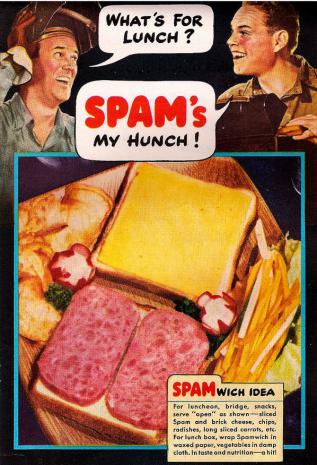
Little do many people know, the term actually refers to and originates from the glorious canned luncheon meat of the same name. In the 90s when email became popular, users began referring to a classic Monty Python sketch to talk about these unwanted but ubiquitous messages. In the sketch, a couple is dining at a restaurant in which Spam is part of nearly every item on the menu, much to the chagrin of the wife.
Email users adopted the "spam" moniker to refer to any unwanted, mass emails — because Spam (the meat) was often unwanted and yet everywhere.
Before being the butt of a joke in 1970, though, it was on the losing end of soldiers' jokes during WWII. As we'll see later, Spam supplied our armed forces with many of their meals. Prior to WWII, however, it enjoyed a brief stint as a popular and innovative product born from the ingenuity of southern Minnesotans.