










Breaking News
 Trump's "Russian sanctions" Have Destroyed the German Automobile Industry
 Where are the headlines? 2026 is the 'First Time in 112 Years: No Atlantic Hurricanes By Sept. 2
 CNN Staffers Panic over Paramount Merger: 'Bloodbath Coming,' Newsroom Is 'Like a Funera
 Tesla Model 3 killer charges from 10 to 97% in just 9 minutes
Top Tech News
 BEYOND THE MOON: NASA plans a nuclear-powered fleet to push DEEPER into space
 Big Oil Backs Mazama's $135 Million Bet On Superhot Geothermal
 Quantum compass takes flight on Northrop's Lumberjack drone
 Terrifying AI Behavior Even Its Creators Couldn't Explain
 WW3 Near-Miss? AI Hallucinated Nuclear Weapons Components Aboard Chinese Vessel Bound For Iran
 Stripe Is Building the Toll Road for the Machine Economy
 Toyota Dakar hopeful swaps twin-turbo V6 for hydrogen fuel cells
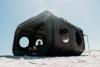 4-min turbo-inflatable cubic camp castle is now available in the USA
 Researchers Used Claude To Hack OpenAI Employee Accounts
 Chinese Scientists Develop New Oil Refining Method That Cuts Energy Use by 90%



A Furry Diving Suit Could Keep You Warm
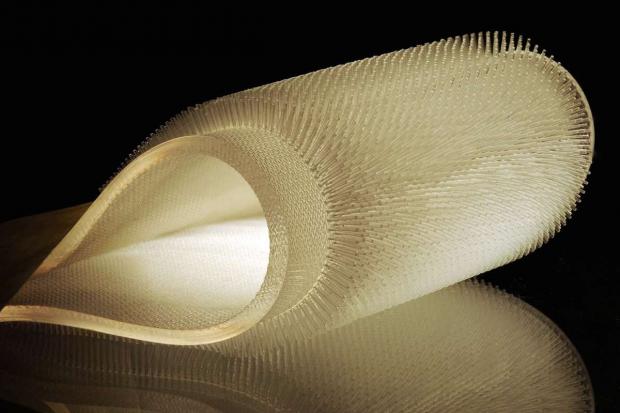
Whereas dolphins and whales rely on thick blubber to help keep warm in cold water, fur seals and sea otters depend on dense fur to trap a layer of air against their bodies. Since air does not conduct heat as well as water, air layers can insulate against heat loss.
Now mechanical engineer Alice Nasto at the Massachusetts Institute of Technology have created artificial mimics of such fur to see how these hairs protect these seafaring creatures.
"Our research group studies a lot of biologically inspired fluid mechanics problems, such as how snails use slime for locomotion, or how water striders walk on water," Nasto says.
The researchers used laser-cut acrylic molds to fabricate hairy surfaces made of silicone rubber. They next experimented with the effects that hair properties such as hair length and hair spacing had when these materials were plunged at precise speeds into liquids such as silicone oil, which comes in a variety of viscosities.