










Breaking News
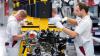 Trump's "Russian sanctions" Have Destroyed the German Automobile Industry
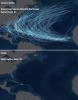 Where are the headlines? 2026 is the 'First Time in 112 Years: No Atlantic Hurricanes By Sept. 2
 CNN Staffers Panic over Paramount Merger: 'Bloodbath Coming,' Newsroom Is 'Like a Funera
 Tesla Model 3 killer charges from 10 to 97% in just 9 minutes
Top Tech News
 BEYOND THE MOON: NASA plans a nuclear-powered fleet to push DEEPER into space
 Big Oil Backs Mazama's $135 Million Bet On Superhot Geothermal
 Quantum compass takes flight on Northrop's Lumberjack drone
 Terrifying AI Behavior Even Its Creators Couldn't Explain
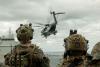 WW3 Near-Miss? AI Hallucinated Nuclear Weapons Components Aboard Chinese Vessel Bound For Iran
 Stripe Is Building the Toll Road for the Machine Economy
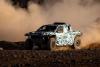 Toyota Dakar hopeful swaps twin-turbo V6 for hydrogen fuel cells
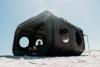 4-min turbo-inflatable cubic camp castle is now available in the USA
 Researchers Used Claude To Hack OpenAI Employee Accounts
 Chinese Scientists Develop New Oil Refining Method That Cuts Energy Use by 90%



Did you know 'storm spotters' in your community keep you safe during severe weather?
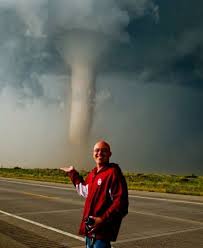

Weather radar showing a hurricane (Photo: NOAA)
Civic minded citizen scientists in your community help meteorologists and the National Weather Service stay abreast of inclement weather with on-the-ground data.
Earlier this week, the Midwest and Northeast were slammed with tornados and thunderstorms that grounded planes and held up trains. Thousands of people along the Northeast corridor lost power as a result.
During such hazardous weather, we rely on the knowledge, skill and expertise of meteorologists and designated emergency personnel to keep us safe and in the know. They in turn rely on data supplied by not just satellites and doppler radars but also – a network of citizen scientists.
But wait. With all our sophisticated technology, what could a few volunteers possibly contribute?
"Radars can tell us that there is heavy snowfall, but radars don't tell us how much, or if rain is mixing with the snow, or what damage is occurring. Our spotters do," explains Tanja Fransen Warning Coordination Meteorologist with the National Weather Service in Glasgow, Montana.
The 'spotters' she is referring to, also Skywarn's 'storm spotters' are a national network of over 350,000 volunteers who work with their local emergency and weather centers to monitor and report inclement weather. Skywarn was a response to the Palm Sunday Tornado Outbreak a particularly devastating series of tornadoes that ripped through Midwestern states in 1965[1] Overseen by NOAA's National Weather Service, the Skywarn program trains citizens to identify severe storms and provide accurate reports of storm developments and effects.